Zum Inhalt springen
DACH Schutzbekleidung GmbH & Co. KG
  • Home
  • Shop

    Produkte


    Alle Produkte
    Kopfbedeckungen
    Augen & Gesichtsschutz
    Atemschutzmasken
    Medizinische Masken
    Schutzanzüge
    Schutzkittel
    Schürzen
    Hemden & Hosen
    Armschutz & Überschuhe
    Handschuhe
    OP Abdeckungen
    Zubehör

    Anwendung


    Reinraum
    Patientenschutz
    Antistatisch
    Steril
    Viren- & Bakterienschutz
    Chemikalien- & Zytostatikaschutz

    Branchen


    Krankenhaus & Praxis
    Rettungsdienst
    Pflege
    Labor & Pharma
    Industrie
    Mikroelektronik
    Lebensmittel
    Landwirtschaft

    Highlights


    Schutzsets
    Sale 
  • Unternehmen

    Über uns

    Erfahren Sie mehr über unser Unternehmen, unsere eigene Produktion und die Werte, die prägen.

    Mehr erfahren →

    Text

    DACH Wissen

    Entdecken Sie fundiertes Fachwissen, interessante Einblicke und Wissenswertes rund um Schutzbekleidung.

    Beiträge entdecken →

    Karriere

    Entdecken Sie Ihre beruflichen Möglichkeiten bei DACH und werden Sie Teil unseres Teams.

    Jetzt bewerben →

  • Service
  • Kontakt
  • 0
  • 0
  • English (US) Deutsch
  • Anmelden
DACH Schutzbekleidung GmbH & Co. KG
  • 0
  • 0
    • Home
    • Shop
    • Unternehmen
    • Service
    • Kontakt
  • English (US) Deutsch
  • Anmelden

Which Protective Coverall Is Right for Which Application?

YOUR GUIDE TO CHOOSING THE RIGHT PROTECTION
25. November 2026 durch
Firma GmbH & Co, Rico Rossek
in Arbeitsschutz & PSA

CHOOSING THE RIGHT PROTECTIVE COVERALL

Not all protective coveralls offer the same level of protection. While some models protect against dust and solid particles, others are designed for handling liquid chemicals. But which disposable coverall is suitable for which application?

The key factor is the workplace risk assessment. Particular consideration must be given to the hazardous substances used, their concentrations, the type and intensity of exposure, and the expected duration of work.


PPE Categories: How High Is the Risk?

Regulation (EU) 2016/425 classifies personal protective equipment (PPE) into three categories based on the associated risks:

  • Category I: Protection against minimal risks.

  • Category II: Protection against risks that do not fall under Category I or Category III.

  • Category III: Protection against risks that may result in very serious consequences, such as death or irreversible damage to health.

Category III PPE is particularly relevant when handling hazardous chemicals. However, the actual level of protection provided by a protective coverall can only be assessed based on its tested properties and the corresponding protective clothing types.

Protective Coveralls: Types 3 to 6 Compared

The type classification indicates which forms of exposure a chemical protective coverall has been tested against. It therefore provides important guidance when selecting suitable protective clothing.

Protection Type
Protective Performance
Typical Exposure
Type 3
Liquid-tight protective clothing
Liquid jets
Type 4
Spray-tight protective clothing
Liquid sprays
Type 5
Protection against airborne solid particles
Hazardous dust and particles
Type 6
Limited protection against liquid chemicals
Light splashes and low levels of spray exposure

A protective coverall can meet the requirements of several protection types simultaneously. However, the type classification does not guarantee resistance to all chemicals. The tested material properties and specific conditions of use must also be taken into account.

What Should You Consider When Choosing Protective Clothing?

In addition to the protection type, other factors determine whether a protective coverall is suitable for its intended application.

  • Chemical Resistance: The material, seams, and closures must provide sufficient resistance to the hazardous substances used. Relevant test results and permeation data are among the key factors to consider.

  • Duration of Wear and Physical Demands: Working duration, intensity of movement, and thermal stress influence both the protection requirements and wearing comfort.

  • Fit and Interfaces: The protective coverall must provide sufficient freedom of movement. At the same time, the interfaces with gloves, respiratory protection, and footwear must be properly secured to ensure that no unprotected areas remain.

Depending on the working environment, additional requirements may apply, such as electrostatic properties or protection against biological hazards. Compliance with these requirements must be verified based on the respective product marking and technical documentation.
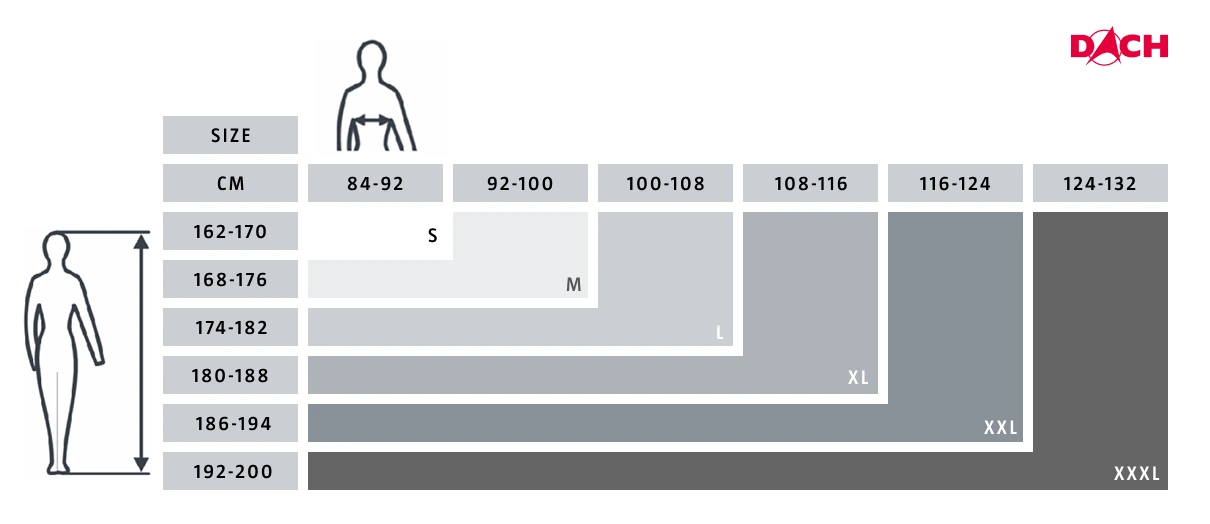

Size Guide Overall

The Right Protective Coverall from DACH

Whether in industry, the pharmaceutical sector, or laboratories, DACH Schutzbekleidung offers a range of disposable protective coveralls for professional applications and industry-specific requirements.

Selecting the right protective coverall starts with a thorough risk assessment and a comparison of the technical product properties. After all, it is not the type classification alone, but the verified suitability for the specific application that determines whether a protective coverall provides the required level of protection.
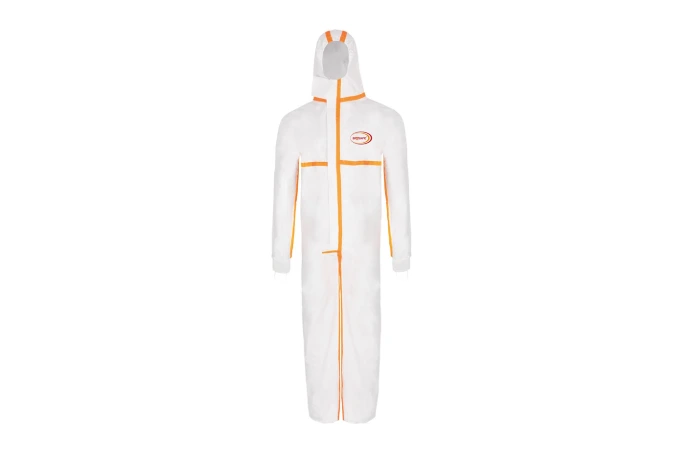
Unsere Schutzanzüge

Dach Schutzbekleidung BioSafe REF 561
DACH Wissen

Reinraum & Pharma
Medizin & Hygiene
Arbeitsschutz & PSA
Produkte & Material

Folge uns
unser NEWSLETTER

 Bleiben Sie auf dem Laufenden mit unserem monatlichen Newsletter „TheCoverAll“. Er bietet aktuelle Themen und nützliche Einblicke aus verschiedensten Branchen.

Jetzt anmelden


Das könnte Sie auch interessieren

20.11.2026

DIN EN 511: Welche Schutzhandschuhe schützen vor Kälte?

18.11.2026

EN 166: Augenschutz

DIN EN 511: Welche Schutzhandschuhe schützen vor Kälte?
KÄLTESCHUTZ RICHTIG VERSTEHEN
Produktkategorien
  • Kopfbedeckung
  • Augen & Gesichtsschutz
  • Atemschutzmasken
  • Medizinische Masken
  • Schutzanzüge
  • Schutzkittel
  • Schürzen
    Hemden & Hosen
    Armschutz & Überschuhe
    Handschuhe
    OP Abdeckungen
    Zubehör
    Schutzsets

Text

Anwendung

Text

  • Reinraum
  • Patientenschutz
  • Antistatisch
    Steril
    Zytostatika
    Chemikalienschutz
Branchen
  • Krankenhaus & Praxis
  • Rettungsdienst
  • Pflege
  • Labor & Pharma
    Industrie
    Mikroelektronik
    Lebensmittel
    Landwirtschaft
Unternehmen
  • Über uns
  • Service
  • DACH Wissen
  • Karriere
Nehmen Sie Kontakt auf
  • Kontakt
  • info@dach-germany.de
  • +49 7222 159 89-0
Wir sind für Sie da:
Mo.–Do. 8:00–17:00

Fr. 8:00–16:00

Folgen Sie uns
Impressum | Datenschutzerklärung | AGB | Nutzungsbedingungen |Cookies | Newsletter
Unterstützt durch Odoo - Die #1 Open-Source-E-Commerce

Wir verwenden Cookies auf dieser Website, um Ihnen ein besseres Nutzererlebnis zu bieten. Cookie-Richtlinien

Nur essentielle Ich stimme zu