Lightweight, breathable, liquid-repellent or particularly durable: the properties of disposable protective clothing are largely determined by the materials used. But why are different materials used for protective coveralls, respirators and protective gloves?
The key factors are the requirements for protective performance, wearing comfort and the intended application.
Nonwoven Fabrics – The Foundation of Many Protective Products
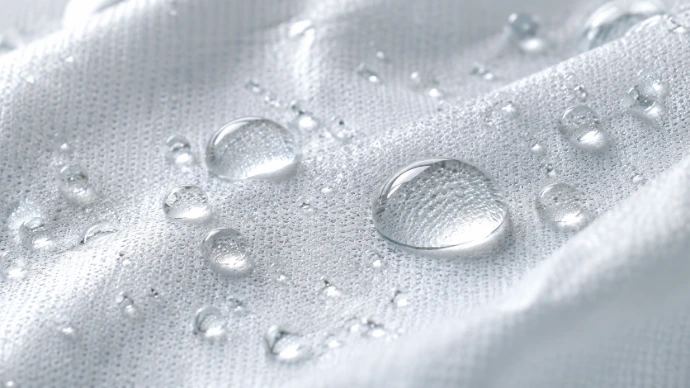
Polypropylene (PP) is one of the most commonly used plastics in the manufacture of disposable protective clothing. Its low weight, versatile processing options and water-repellent properties make it a particularly attractive material..
Depending on the manufacturing process, nonwoven fabrics with different properties are produced:
Spunbond Nonwoven: A mechanically durable, air-permeable nonwoven fabric used in products such as protective hoods and basic protective coveralls.
Meltblown Nonwoven: A particularly fine fibre structure with good filtration properties, used, for example, as a filter medium in respirators.
SMS Nonwoven: A three-layer composite consisting of spunbond, meltblown and spunbond, combining mechanical strength with barrier performance and breathability.
Films and Composite Materials
Where higher levels of liquid protection are required, polyethylene (PE) films or composite materials consisting of nonwoven fabric and film are frequently used.
Microporous films allow water vapour to pass through while forming a barrier against liquids. Fully coated materials, on the other hand, are frequently used in applications with higher liquid barrier requirements.
One example is the chemical protective coverall from DACH, which consists of an SMS nonwoven fabric laminated with PE film.
Materials Compared
Material | Characteristic Properties | Typical Products |
PP Spunbond Nonwoven | Lightweight, air-permeable | Protective hoods, coveralls |
PP Meltblown Nonwoven |
| Respirators |
SMS Nonwoven | Durable, breathable, barrier performance | Protective gowns, protective coveralls |
Microporous PP-PE Laminate | Liquid-repellent, water vapour-permeable | Protective coveralls |
Fully Coated PP-PE Laminate | Enhanced liquid barrier | Chemical protective coveralls |
Polyethylene (PE) | Flexible liquid barrierFlexible |
|
Nitrile (NBR) |
|
|
Natural Rubber Latex | Highly elastic, good fit | Disposable gloves |
Vinyl (PVC) | Lower elasticity | Disposable gloves |
However, actual protective performance does not depend on the base material alone. Material thickness, manufacturing quality, seam construction and the results of product-specific tests are equally important.
The Right Material for Every Application
While lightweight and air-permeable materials are a priority for basic hygiene measures, working with hazardous substances requires appropriately tested barrier properties. In cleanrooms, particle release also plays an important role.
Material selection should therefore always be tailored to the specific application and its associated requirements.
Discover Our Head-to-Toe Protective Clothing
Innovative material combinations, tested quality and application-specific product solutions: DACH Schutzbekleidung combines functional materials with the requirements of a wide range of working environments. Discover our versatile range of products for professional applications.